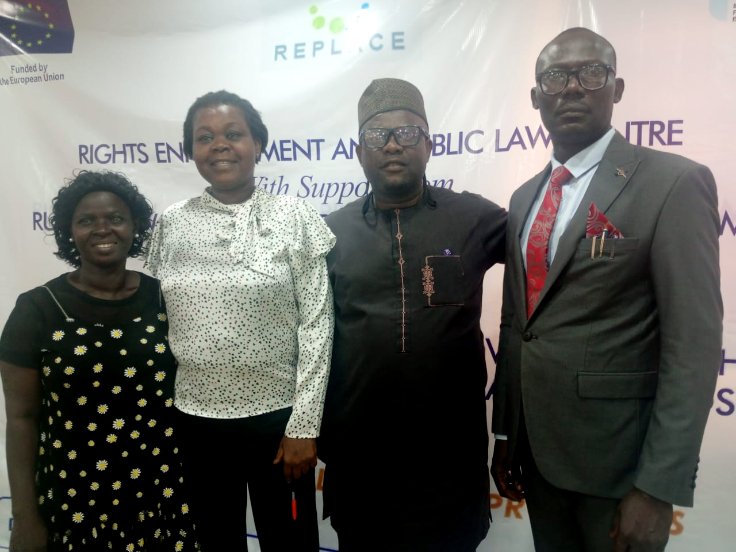
From L-R: State Coordinator, Legal Aid Council of Nigeria, Iyabo Akingbade; Executive Director, Rights Enforcement and Public Law Centre, Felicitas Aigbogun-Brai; the Convener, Criminal Justice Network of Nigeria (CJNN), Nathaniel Ngwu and the coordinating Officer, Rule of Law and Anti-Corruption Programme (RoLAC), Mr Samson Onwusanya during the training for lawyers and legal aid providers on the Administration of Criminal Justice Laws held in Lagos/ Photo: Benedicta Bassey
***as REPLACE trains lawyers and legal aid provider on ACJL
Stakeholders in the legal and civil society in Lagos state have called for reforms around the Administration of Criminal Justice Law (ACJL) to ensure human rights issues are critically dealt with for swift justice.
They also demanded action towards the enforcement of the law in the state, noting that, many of the provisions of the law were unknown and poorly implemented, leaving citizens at the mercy of the Nigeria’s justice system.
They made this call during a capacity-building training for legal aid providers on the Administration of Criminal Justice Law (ACJL) in Lagos state, organised by the Rights Enforcement and Public Law Centre (REPLACE) in partnership with Rule of Law and Anti-Corruption Programme (RoLAC) and IIDEA.
The training with the theme, “Exploring key human rights provisions of the Administration of Criminal Justice Law of Lagos State,” the Executive Director of REPLACE, Felicitas Aigbogun-Brai, said was necessitated by the need to promote reforms and empower legal aid provider and civil societies with provisions of the law to enhance justice as regards human rights issues.
Also Read: https://compasseyemedia.com/2025/12/15/wrahp-empowers-journalists-on-sensitive-sgbv-coverage/
She said, the law, despite being in force for 10 years, had not achieved its intended impact because of low awareness and weak enforcement.
She underscored the need for legal aid provider to take actions in respect of the provisions of the law, adding that, “key provisions of the law designed to protect citizens, are often disregarded, particularly by law enforcement officers and even the public.”
She identified key aspect of the law to include; prohibition of arresting individuals or family members in place of others, a practice, she said, persists despite clear legal backing against it.
She expressed public mixed feelings regarding the law, adding that, many citizens during sensitization campaign doubt the efficacy of the law to protect them when situations arise.
Aigbagbo- Brai frown at systemic resistance within institutions barring females’ sureties due to cultural or practical biases even with the law backing, noting that, the ACJL should be upheld and implemented irrespective of gender.
She, however, appeal to legal aid providers to ensure the law is effectively implemented, emphasising strict judicial enforcement to compel compliance from law enforcement agencies for proper justice system.
Earlier, the Convener of the Criminal Justice Network of Nigeria (CJNN), Nathaniel Ngwu, emphasised the need for effective implementation of the ACJL in Lagos State and Nigeria at large.
He said, “ACJL is crucial for ensuring justice, fairness, and human rights protection and it is a vital tool for reforming our justice system; and it’s imperative we get it right. ACJL is not just a law, it’s a beacon of hope for the vulnerable and a check on abuse of power.”
Ngwu who spoke on the subtopic, ‘Advancing justice with dignity with compliance with the reviewed provisions of the ACJL of Lagos state,’ stressed that, the criminal justice laws across states lacked full implementation, adding that, “challenges to the full implementation of the ACJL includes; prolonged detention without trial, poor investigation practices, and corruption, which have continued to undermine justice delivery.”
He stressed that while advocating for human rights, stakeholders must also respect legal institutions and engage constructively with them.
Meanwhile, the discussion also underscored the role of magistrates in visiting police stations to monitor detention conditions and enforce accountability, as well as the need for better training of law enforcement officers and legal practitioners.
In his keynote address, the coordinating Officer, Rule of Law and Anti-Corruption Programme (RoLAC), Mr Samson Onwusanya, urged law enforcement agencies, judges, and lawyers to prioritize justice and fairness while implementing the law.
He commended civil society organizations and government agencies working to improve the justice system and reiterated their commitment to supporting initiatives promoting justice, accountability, and human rights.
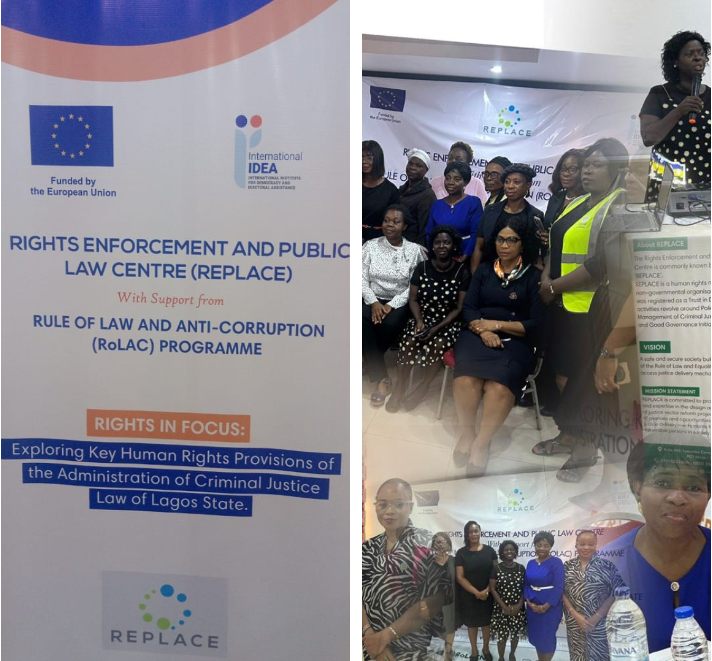
One of the participants at the training, Lydia Ohonsi, the Alternate Vice-Chairman, Human rights committee, Nigerian Bar Association (NBA), Lagos Branch, under the James Sonde led administration, said the training was valuable and a timely intervention.
Ohonsi noted that, “the training was a valuable and timely intervention that aligns with the objectives of the NBA Lagos HRC in promoting human rights and ensuring access to justice. The Committee remains committed to supporting initiatives that strengthen the criminal justice system and uphold the rule of law in Lagos State.
“Key outcomes of the training included: increased understanding of the provisions and objectives of the ACJL, enhanced capacity of participants to apply the law in practice, identification of systemic challenges hindering effective implementation as well as collaborative discussions on actionable steps and the way forward, including stronger inter-agency cooperation and sustained stakeholder engagement,” she added.
About the Author