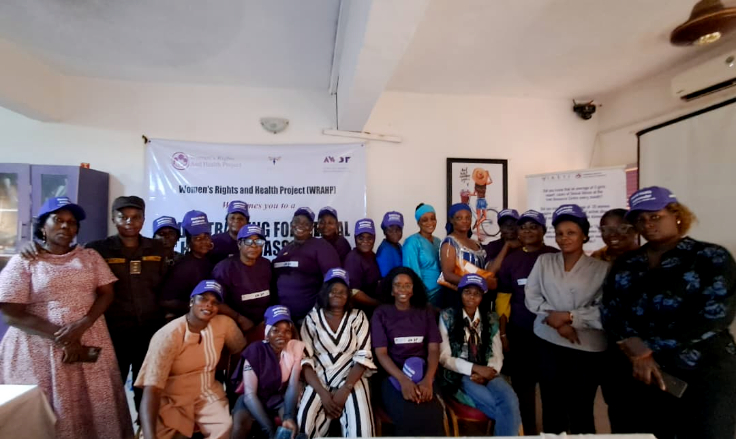
Cross-section of participants at the training for Mental Health Ambassadors in Lagos on Thursday
The Women’s Rights and Health Project (WRAHP), in partnership with the African Women’s Development Fund (AWDF), on Thursday advocated the need for mental health awareness and the promotion of laws to enhance mental health promotion, trauma healing and psychological first aid delivery in Lagos state.
The group made this advocacy call during a two-day training in Lagos state for Mental Health Ambassador.
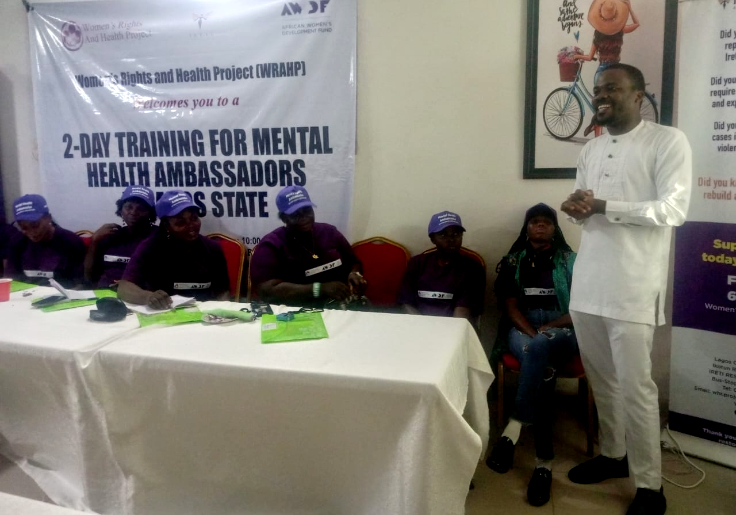
The training with the theme, “Building Community Leadership for Mental Health Promotion, Trauma Healing, and Psychological First Aid,” equipped the women Ambassador with the knowledge and practical skills required to serve as Mental Health Ambassadors within their communities.
Speaking at the event, the Centre Manager, Ireti Resource Centre/Programme Officer for the PWD Project, WHRAP, Precious Ndukwu said the training became necessary to respond to the growing need for accessibility, community-based mental health support systems, particularly for women and other vulnerable groups.
Explaining mental health, Ndukwu said: “Good mental health is important at every stage of life, from childhood and adolescence through adulthood. There is need for the people to take care of their health given the present economic, social, environmental, psychological factors among other stressors that impact the people.”
She called for a sustained mental health awareness and community-based trauma education as pertinent to saving lives and fostering long-term societal wellbeing.
According to her, “WRAHP’s advocacy focuses on three areas: public education, training for community leaders, and creating safe spaces for people to share their experiences without fear of discrimination.
“People are suffering in silence because they are afraid of being labelled, judged, or excluded. Mental health is health. Until we start treating it that way, people will continue to delay care until it becomes a crisis.
“However, Mental illness is quite expensive, that is why we preach prevention, and the need to stay away from substance abuse to guide against addiction. There are laws backing mental health patients, hence we called for the right awareness in relations to those laws, so those with such illness are aware of your right and sustain their mental wellbeing.
Ndukwu also called on the government at all levels to create more facilities to accommodate mental health patient and enhance awareness on the legal frame work in the country.
“The Federal Government and Lagos state government should start with awareness so people can know their mental health right and create more facilities and make treatment as cheap as possible.”
WRAHP argues that curbing stigmatisation will improve early intervention and reduce the burden on families and the healthcare system.
The group urged Nigerians to “look out for each other” by checking on friends, listening without judgment, and referring people to professional support when needed.
“Breaking stigma starts with one conversation,” the Programme Officer said. “If we can normalize talking about mental health, we can save lives.”
The Executive Director, WRAHP, Bose Ironsi, said the training covered key areas such as understanding mental health and psychosocial well-being, addressing stigma and myths, and identifying common signs and symptoms of mental health conditions.
According to her, “This training forms part of WRAHP’s ongoing commitment to advancing mental health awareness, promoting gender-responsive interventions, and supporting vulnerable populations through sustainable, community-led solutions.
“The Women’s Rights and Health Project (WRAHP) is a non-governmental organization committed to advancing women’s rights, improving health outcomes, and promoting social justice in Nigeria through advocacy, capacity building, and community engagement.”
Earlier, a Public Health and Global Mental Health Professional, LagosMIND, Lagos State Ministry of Health, Mental Health Desk, Mr. Joshua Nnatus called for stronger and more inclusive mental health awareness.
He explained that Mental illnesses are health conditions involving changes in emotion, thinking, or behavior which can cause distress and problems in daily life. Mental illness is common and does not discriminate — it affects people of all ages, genders, and backgrounds.
He stressed that mental health advocacy should focus attention on teaching people to recognise signs of depression, anxiety and stress, and to respond with empathy instead of gossip, adding that unaddressed trauma often manifests in anxiety, depression and long-term emotional distress, stressing that mental wellness should be treated not only as an individual concern but as a shared community responsibility.
He said sustained mental health awareness and community-based trauma education remain critical to saving lives and fostering long-term societal wellbeing.
Nnatus said stigma could leads to delayed treatment, job loss, and social isolation, adding that, the Lagos State Mental Health Law, the Lagos Mental Health Policy and the National Mental Health Act 2021 had given backing to patients with mental ill-health.
The World Health Organisation describes mental health as ‘a state of well-being in which the individual realises his or her own abilities, can cope with the normal stresses of life, can work productively and fruitfully, and is able to make a contribution to his or her community.’ The WHO also estimates that about 20 per cent of Nigerians suffer mental illnesses.
Nnatus continued that: “We can better support the mental health of young people and foster a healthier, more resilient future generation if their health challenges is addressed with comprehensive, and multi-faceted solutions.
“Mental health refers to our emotional, psychological, and social well-being that affects how we think, feel, and act. It also helps determine how we handle stress, relate to others, and make choices.
“The main concepts of mental health include emotional well-being, psychological well-being, and social well-being while the social factors include the quality of relationships, social support networks, cultural influences, discrimination, and societal stigma”
“Mental health issue is a global challenge that has become necessary to sensitize to live a healthy life.”
He explained that limited access to mental health care and the persistent stigma surrounding psychological conditions have continued to expose many Nigerians to preventable emotional and psychological harm, urging ambassadors to educate, protect, refer and maintain confidentiality in cases of mental health while respecting the rights of those involved.
He called for empathy and evidence-based intervention in handling cases of mental illness, adding that “healing is achievable even in challenging environments. Education and open dialogue are critical to ending the stigmatisation that prevents many Nigerians from seeking help. Lifeline to report cases of mental illness to seek urgent intervention include: 0700 000 6463 · SURPIN 0908 021 7555 · DSVA 0800 033 3333 · Emergency 112/767”
About the Author