AAs part of efforts to advance menstrual health advocacy and tackle period poverty across West Africa, Pad-Up Creations has trained 70 women and men selected from more than 5,300 applicants in a six-week fellowship designed to equip them with the knowledge, skills and confidence to become change-makers in their communities.
The Pad-Up Menstrual Change Makers Fellowship brought together participants from Nigeria, Ghana, Cameroon, Liberia and The Gambia for intensive training in menstrual and reproductive health, advocacy, community engagement, programme design, grant writing, fundraising, leadership and self-discovery.
For many of the fellows, the programme was more than a training course. It became the beginning of a journey to ensure that girls can attend school without interruption, access accurate menstrual health information and manage their periods with dignity.
Founder of Pad-Up Creations, Olivia Onyemaobi, said the fellowship was created to build a network of advocates capable of transforming menstrual health outcomes at the grassroots.
“The fellowship called for applications from people who wanted to advance menstrual health and hygiene across West Africa. Over six weeks, participants were trained in different aspects of advocacy, fundraising, grant writing, community engagement and reproductive health,” she said.
Beyond classroom sessions, fellows were required to design and present community-based projects they intend to implement after graduation.
According to Onyemaobi, Pad-Up Creations provides stipends to support the projects while also connecting fellows with potential partners and funders, ensuring that the knowledge acquired translates into lasting impact.
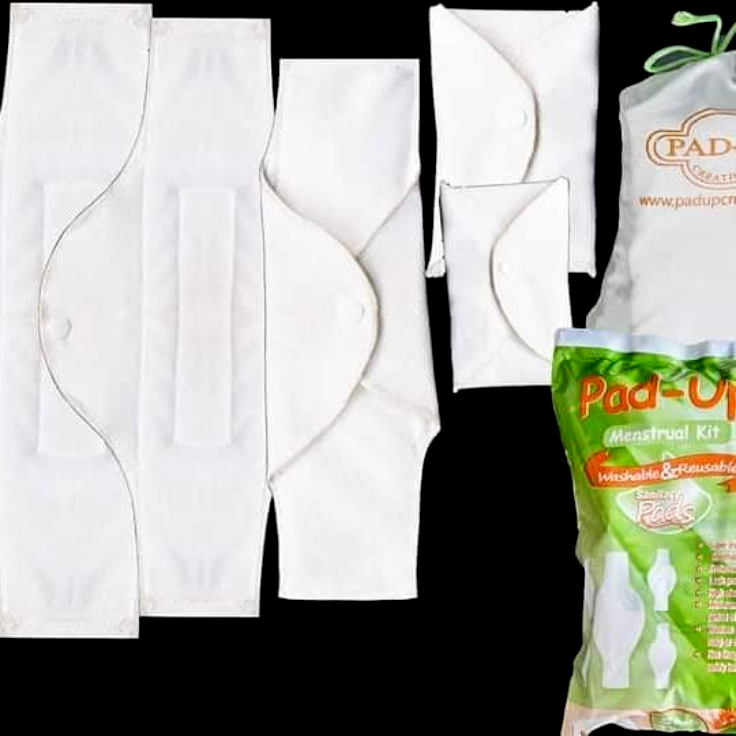
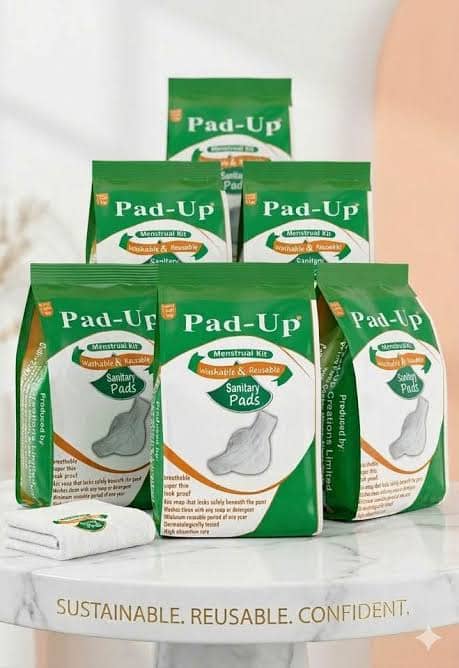
The organisation, which produces Nigeria’s first certified reusable sanitary pads and has expanded its menstrual health programmes across several African countries, said the fellowship reflects its commitment to reducing period poverty through education, innovation and community-led solutions.
For Onyemaobi, the success of the programme will not be measured by the number of women trained but by the number of girls who remain in school, access menstrual products and experience menstruation with dignity because someone in their community decided to act.
Programme Lead Naomi Ngbede said interest in the fellowship exceeded expectations, with more than 5,300 applications received within two weeks.
Following a rigorous selection process that narrowed the pool to 203 candidates, only 70 participants were admitted.
“We wanted people who shared our vision and values, people with empathy, confidence, a growth mindset and a genuine commitment to creating change in their communities,” she said.
Rather than expecting large-scale interventions immediately, Ngbede said fellows were encouraged to begin with the resources available to them.
“If all they can do is educate two girls or 10 girls every day, that’s a good place to start. What matters is sustaining the vision and growing from there.”
She explained that fundraising and grant-writing sessions were deliberately included to help participants secure the resources needed to sustain their work beyond the fellowship.
Pad-Up Creations also plans to monitor the fellows after graduation, following up on the projects they committed to implementing while providing continued support where necessary.
For many participants, being selected among thousands of applicants was both a validation of their work and an opportunity to deepen their impact.
For Omoloye Joy Eniola, the fellowship gave her the confidence and practical tools she had long been searching for.
“I had always wanted to do something like this for my community but didn’t know how to go about it,” she said. “The fellowship gave me practical tools to better serve girls.”
She said one lesson changed her perspective completely.
“I realised menstrual health is not only a health issue but also an issue of education and dignity. When girls lack menstrual products or accurate information, it affects their confidence, education and future.”
Eniola plans to organise school outreaches, provide menstrual and sexuality education and partner with organisations to distribute sanitary pads to girls from low-income communities.
Another fellow, Abdulrazaq Opeyemi, said the programme reinforced his understanding that menstrual health extends far beyond hygiene.
“It showed me that menstrual health is not just a hygiene issue but a broader development issue,” he said.
He intends to organise awareness campaigns and advocate for improved access to menstrual products and accurate menstrual health information.
For Jacob Tofunmi, listening to the personal stories shared throughout the fellowship became one of its defining moments.
“Hearing real-life stories made me realise that menstrual health is a matter of dignity, equality and human rights,” she said.
She believes the grant-writing skills she acquired will enable her to secure funding for sustainable menstrual health projects in underserved communities.
Inspired by the training, another fellow, Ruth Stephen from Nasarawa State, developed Project PADHER—short for Period Awareness, Dignity, Health Education and Resilience.
The initiative aims to educate adolescent girls, distribute reusable menstrual pad kits and establish menstrual health clubs across communities in Lafia Local Government Area before expanding to other parts of the state.
“My motivation has always been community impact,” she said. “I wanted the knowledge, skills and network needed to address period poverty and menstrual stigma, especially among adolescent girls.”
She hopes to create safe spaces where girls can learn about menstrual hygiene without fear, shame or stigma.
The fellowship’s impact also reached communities beyond Nigeria.
For Akem Aurelia Njang from Cameroon, being selected among 70 fellows from over 5,300 applicants affirmed the work she had already begun through Inclusive Edge in the country’s conflict-affected Northwest Region.
“In that kind of environment, menstrual health is the last thing anyone talks about, yet girls are quietly dropping out, missing exams and losing their futures because of something as basic as not having a sanitary pad,” she said.
She explained that one of the fellowship’s greatest lessons was learning how to transform passion into a well-designed programme capable of attracting support and producing measurable impact.
“Before this fellowship, I had the heart for this work. After it, I have the architecture,” she said.
Njang is already implementing her capstone project, the Pad Up a Girl Campaign, combining menstrual health education with sanitary pad distribution in schools across the Northwest Region.
One lesson that particularly stayed with her was recognising that menstrual stigma is driven not only by poverty but also by silence.
“We often focus on the material problem, but underneath all of it is a silence that is taught,” she said.
That realisation prompted her team to include boys in menstrual health education sessions, believing that ending stigma requires entire communities—not just girls—to be part of the conversation.
She also highlighted what she described as the “invisible dropout”—girls who gradually miss school during their menstrual periods until they eventually fall behind and stop attending altogether.
“My goal is to ensure that no girl in rural and conflict-affected Cameroon loses a single school day to period poverty,” she said.
Another fellow, Christina Blama-Hessou from Liberia, said being selected as one of only two participants from her country came with both pride and responsibility.
“My first period was filled with fear, silence and misinformation, and I know I’m not alone in that experience,” she said.
Blama-Hessou said the fellowship strengthened her resolve to ensure that girls do not face menstruation without knowledge or support.
One of the programme’s defining moments for her came during the presentation of her capstone project.
“I realised people are willing to support meaningful work when they can clearly see how it will improve lives,” she said.
She noted that many girls still experience their first menstruation before receiving accurate information, leaving them to depend on myths and misinformation.
Through her project, What I Wish Someone Had Told Me, she plans to work with girls, parents, teachers, health workers, community leaders and boys to strengthen menstrual health education in Liberia while expanding peer-to-peer menstrual health clubs in schools.
Her long-term vision is to establish Liberia’s first women’s wellness centre where women and girls can access trusted information, support and services that promote their overall well-being.
As the newly trained fellows return to their communities across West Africa, their work is expected to extend far beyond awareness campaigns.
Some will establish menstrual health clubs in schools. Others will distribute reusable sanitary pads, engage parents and teachers, mobilise community leaders, or train boys to become allies in ending menstrual stigma.
Though their projects differ, they share a common goal: ensuring that no girl is forced to miss school, lose confidence or sacrifice her future simply because of her period.
For Pad-Up Creations, that is the true measure of success—not the certificates awarded at the end of six weeks, but the lives transformed long after the fellowship has ended.
About the Author