
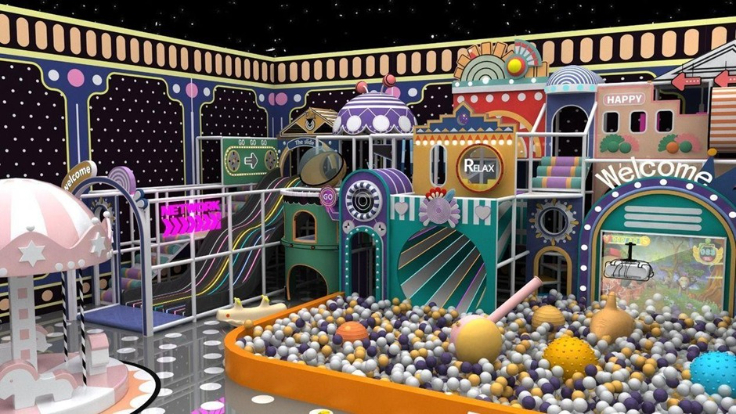
The indoor entertainment industry in Africa is an emerging market with huge potential, signaling a transition from traditional amusement activities to the creation of indoor play environments that support children’s joy and imagination, while also enhancing family connection. A growing number of indoor playground equipment manufacturers are positioning themselves to capitalise on the anticipated expansion of the sector.
One such company is Dream Garden, a China-based manufacturer of indoor playground and amusement equipment. Founded in 2009 and later registered as Wenzhou Dream Garden Amusement Equipment Co., Ltd., the firm has expanded internationally, supplying equipment for trampoline parks, shopping malls, and family entertainment centres.
The potential growth of the industry in Africa hinged on the continent’s rapid urbanisation and a youthful population with a rising appetite for indoor entertainment experiences— data from global institutions such as the United Nations and the World Bank support this trend. At the same time, market research forecasts suggest that the indoor entertainment industry could double in value over the next decade.
Many industry players are leveraging these projections to support expansion strategies.
Stefan Zhang, the founder of Dream Garden, noted that the company views Africa as a region with significant long-term potential. “Our company has completed more than 2,000 projects across 60 countries,” he added.
Meanwhile, calling for caution, PwC indicates in its report a shift toward experience-based consumption and notes that discretionary spending is highly sensitive to economic downturns, which could disproportionately affect sectors like indoor entertainment.
“The global market for playground and amusement equipment is seeing increased competition, and manufacturers are differentiating themselves through safety certifications, pricing, and design innovation,” said Zhang.
In many African markets, despite growing interest from suppliers, infrastructure gaps, inconsistent regulatory environments, and limited access to financing still make it hard to build large-scale leisure facilities. Industry experts say that even though suppliers like Dream Garden may be keeping an eye on these areas, actual project execution is still limited.
Industry-wide transparency also remains a critical concern, particularly among privately held manufacturers. While international safety benchmarks like EN 1176 and ASTM are essential, buyers who skip rigorous due diligence face significant risks, including exposure to substandard or counterfeit equipment. This is why some experts are uncertain about the extent of the growth of the industry in Africa.
For companies like Dream Garden, expansion into emerging markets like Africa may depend less on headline demographic trends and more on practical considerations such as infrastructure readiness, local partnerships, transparency, and regulatory stability.
About the Author