
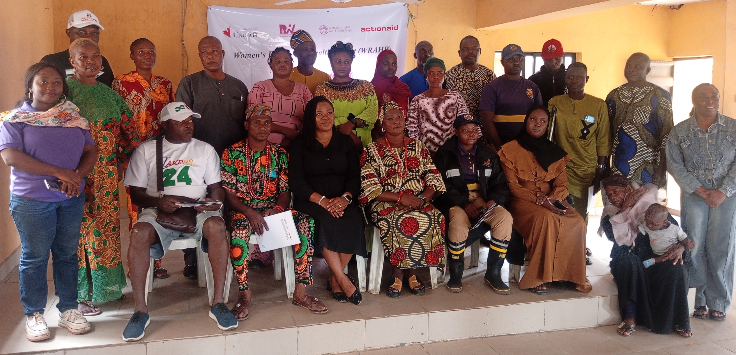
Cross section of participants at the community stakeholders training on SGBV in Lagos on Thursday
In its bid to tackle the high rates of sexual and gender-based violence (SGBV) in Lagos State, the Women’s Rights and Health project (WRAHP), in partnership with the ActionAid Nigeria through the Renewed Women’s Voice Leadership Nigeria on Thursday conducted a training session on SGBV prevention in the state.
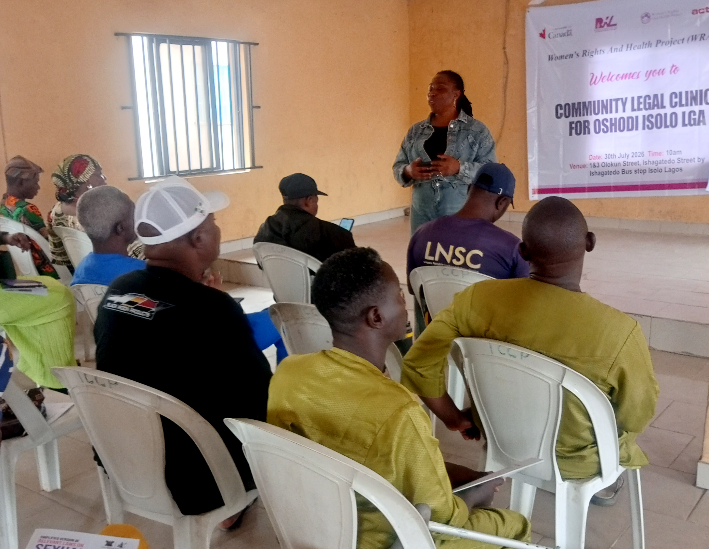
The training targeted at community stakeholders was pertinent to discuss critical legal frameworks against SGBV crimes, to strengthen grassroot responses across the Oshodi-Isolo Local Government Area, Lagos state.
The stakeholder engagement, held at the Ishagatedo hall, Lagos State, focused on preventing SGBV by strengthening community collaboration to prevent and combat SGBV.
The project, titled “Community Legal Clinic for Oshodi-Isolo LGA” is supported by Global Affairs Canada.
Speaking at the event, the Programme Officer, WRAHP, Mrs. Precious Ndukwu, underscored the importance of community partnerships in protecting the rights of persons and ensuring zero tolerance for all forms of SGBV crimes through enacted laws and policies geared towards prevention, response and provisional support to survivors of domestic and sexual violences.
She said, “the training became pertinent to educate community members on their rights with respect to SGBV crimes and ensure justice for vulnerable groups. It is important that everyone is abreast on information about their rights to enable everyone knows their role in preventing GBV in the society.
“If more people are aware of their rights, then, they can defend themselves in incident of abuse. We want a society where women and girls can fully achieve their potential and thrive in their endeavours without their rights being infringed upon and their voices clampdown on.
“So, the essence of the programme is to help the community people to understand what constitutes gender-based violence and how they can work together in preventing violence in their various localities while being abreast with the legal provisions against SGBV in Lagos state,” she said.
Earlier, a Legal Practitioner and Managing partner at Gracefield Chamber, Mrs. Amaka Agianpuye who spoke on relevant laws and legal backing against SGBV crimes explained different act that constitute domestic violence to include: physical abuse, sexual abuse/exploitation including but not limited to rape, incest and sexual assault, emotional and psychological abuse, intimidation, blackmailing, harassment, staling etc.
Agianpuye explained that, “the purpose of the laws is to protect survivors of domestic, sexual and gender-based violence form all forms of discrimination, stigmatization and ensure that they have access to medical, legal and counselling assistance and to enable people report cases of sexual and gender-based violence.”
she called for stronger legislative action, improved survivor support services, and greater community involvement in tackling Gender-Based Violence (GBV), warning that violence against women and girls remains a major public health and development challenge.
One of the participants at the event, Mrs. Silifat Adebayo, stressed that Gender-Based Violence should no longer be regarded as a private family issue but as a public health concern, barrier to justice and inclusive growth.
She said women and girls continue to suffer domestic violence, sexual violence, forced marriage and economic abuse, while many survivors remain silent due to fear, stigma and social pressure.
“The consequences of Gender-Based Violence extend beyond individual survivors. It contributes to poor maternal and reproductive health outcomes, increases vulnerability to infectious diseases, disrupts children’s education, weakens family stability, affects livelihoods and slows community development,” Adebayo added.
The training also emphasised the need for stronger implementation of existing laws, improved coordination among government agencies, better data management and sustainable financing for GBV response programmes.
The non-governmental organisation urged the traditional and religious leaders to continue promoting values that protect the dignity of women and girls, discourage harmful practices and support justice for survivors.
The organisers also appealed community partners to sustain advocacy, community education and service delivery efforts, while amplify survivors’ voices and help break the culture of silence and stigma.
About the Author