
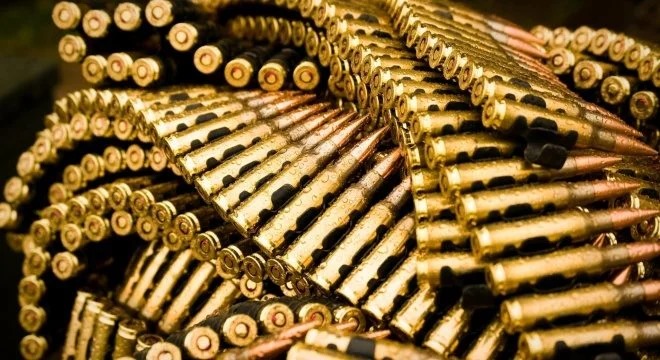
Nigeria’s spending on the importation of arms and ammunition fell significantly, the National Bureau of Statistics have shown.
The drop hit about N49bn from N520bn spent in 2024.
Data from the NBS foreign trade reports show that arms imports were valued at N22.08bn in the first quarter of 2025, declined further to N4.87bn in the second quarter, and rose again to N23.49bn in the third quarter.
The figures were compiled from multiple sources, including the Nigeria Customs Service, the Central Bank of Nigeria, the Nigerian National Petroleum Company Limited, oil and gas companies, private sector operators, and key aviation and port authorities.
The 2025 figures represent a dramatic decline compared with 2024, when Nigeria spent over N520bn on arms and ammunition imports. Notably, N483.85bn of that amount was recorded in the fourth quarter of 2024 alone.
Historical data also show that Nigeria spent N127.16bn on arms imports in 2023, N28.24bn in 2022, N72.50bn in 2021, and N29.24bn in 2020.
A security expert, Chidi Omeje, said the Defence Industries Corporation of Nigeria currently manufactures mainly light weapons.
“I’m surprised to hear that the rate of imports is dropping. I expected it to rise because the country is battling multiple security threats,” he said.
Omeje added that the sophistication of weapons used by criminal groups suggests that security forces still require advanced platforms.
“We have to continue importation until DICON can meet local needs. We have not reached a stage where Nigeria no longer requires arms imports,” he said.
He also suggested that procurement timelines might partly explain the lower figures, noting that defence acquisitions are often based on long-term contracts rather than immediate purchases.
“Orders made last year may still be in the delivery phase. Otherwise, the drop from N520bn to N49bn is too steep. There has to be an explanation,” he added.
In a statement issued in Kaduna, the CEO of DICON-D7G, Osman Chennar, said the milestone reflected the company’s growing capacity to meet Nigeria’s security needs with home-grown defence equipment.
About the Author