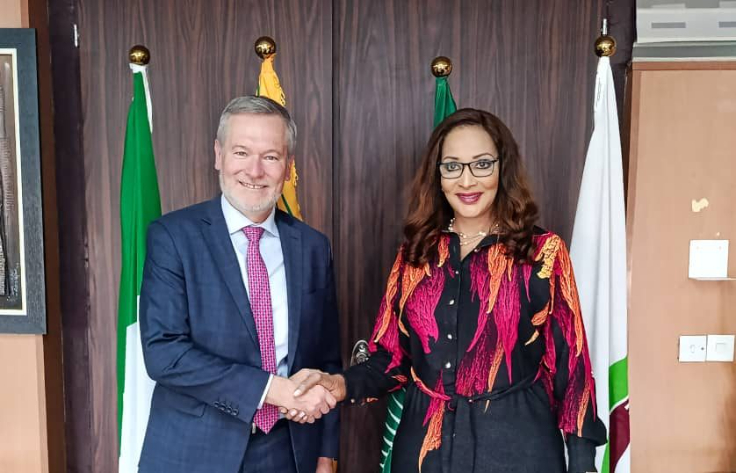
EU Commissioner for Internal Affairs and Migration, Magnus Brunner and the Minister of Foreign Affairs, Amb Bianca Odumegwu-Ojukwu
Nigeria and the European Union have partnered to boost migration cooperation, including moves to conclude the long-pending EU-Nigeria Re-Admission Agreement to ease travels.
Recall that the agreement was initiated in 2016, but recent renewed focus was between the Minister of Foreign Affairs, Amb Bianca Odumegwu-Ojukwu, and the EU Commissioner for Internal Affairs and Migration, Magnus Brunner, on Monday in New York.
This was contained in a statement issued and signed by the Special Assistant on Communication and New Media to the Foreign Affairs Minister, Magnus Eze, on Wednesday in Abuja.
The meeting was held on the sidelines of the 81st United Nations General Assembly at the United Nations Headquarters.
Brunner, according to the statement stressed the importance of concluding the re-admission agreement, noting that its finalisation would provide a basis for broader cooperation between Nigeria and the EU on migration.
“Commissioner Brunner stressed the importance of concluding the Re-Admission Agreement, which was initiated in 2016 and extensively discussed during the 8th Nigeria-EU Ministerial Dialogue in March 2026.
“He noted that its finalisation would provide a basis for broader cooperation between Nigeria and the EU on migration,” the statement said.
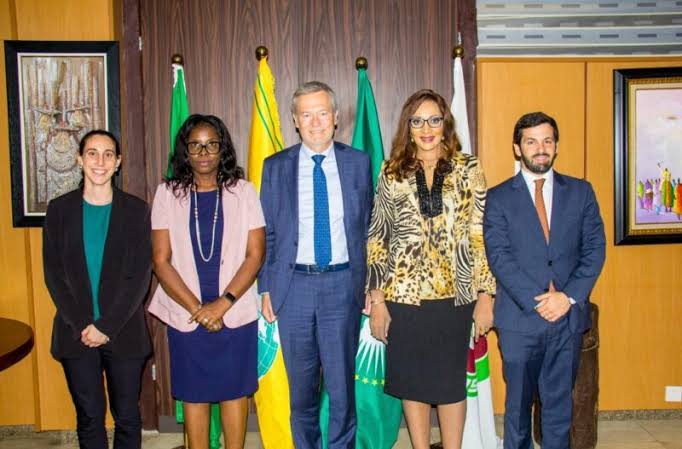
In response, Odumegwu-Ojukwu underscored Nigeria’s interest in ensuring that migration cooperation incorporates reintegration support for returnees, infrastructure development assistance and expanded legal pathways for Nigerians seeking opportunities abroad.
The statement added that Ojukwu “emphasised the importance of creating structured and lawful mobility opportunities, particularly for Nigeria’s large and youthful population, while ensuring that migration cooperation does not undermine the country’s development interests.”
The EU delegation indicated that the concerns had been incorporated into the proposed framework and disclosed plans for a broader Migration and Security Cooperation Contract.
“The proposed framework would cover strategic dialogue on local talent partnerships, mobility and legal pathways, reintegration of returnees, border management and support from the European Border and Coast Guard Agency, Frontex.
“The cooperation would also explore a working arrangement for the exchange of information with Europol to strengthen Nigeria’s capacity to combat transnational organised crime,” the statement further said.
Brunner also highlighted the EU’s interest in developing legal pathways through talent partnerships, while creating opportunities for Nigerian professionals and helping to mitigate concerns over brain drain as well as combating irregular migration.
About the Author