A data from the United Nations High Commissioner for Refugees has revealed that a total of 26,473 Nigerian refugees returned to the country in 2025 under the government facilitated repatriation programmes.
The November 2025 UNHCR Forcibly Displaced Populations data obtained revealed that 2,693 refugees returned spontaneously from Cameroon, Chad, Niger and Sudan since the beginning of the year.
An additional 23,780 were repatriated through bilateral agreements between the Nigeria and Chad in February and Niger between April and November.
According to data sourced from the UNHCR, the International Organisation for Migration’s Displacement Tracking Matrix, the Nigeria Immigration Service and the National Commission for Refugees, Migrants and Internally Displaced Persons, Nigeria still has 408,257 refugees registered in the Lake Chad Basin countries.
According to the report, “Nigerians make up three per cent of the world’s 123 million forcibly displaced persons, including both internally displaced individuals and Nigerian refugees, primarily in the Lake Chad Basin.”
It added that “conflict, insurgency, and communal violence have displaced millions, with the North-East experiencing the highest displacement.”
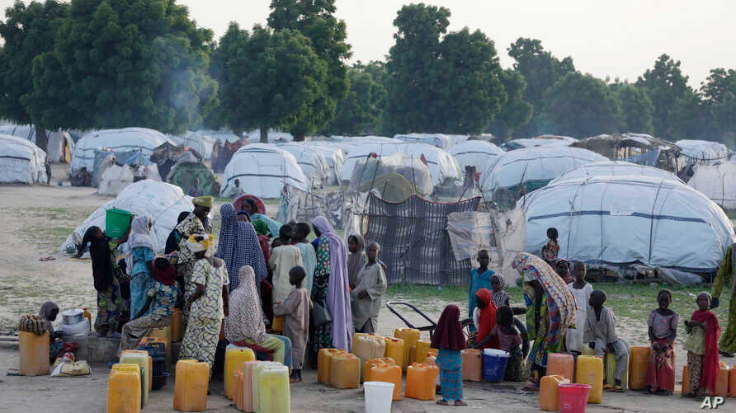
Beyond the refugees abroad, Nigeria is grappling with a staggering internal displacement crisis, with 3.5 million persons displaced across multiple regions, the UNHCR dashboard showed.
The North-East accounts for 2,292,477 individuals displaced, “primarily due to insurgency (92 per cent) and communal clashes (6 per cent),” according to the report.
In the North-West, 650,345 individuals are displaced, while the North-Central region has 601,697 displaced persons, “driven by various conflict dynamics.”
The mass displacement largely stems from the Boko Haram insurgency, communal violence, banditry and climate disasters.
Even as Nigerians seek refuge abroad, the country hosts 141,396 refugees and asylum-seekers from over 45 countries, with the majority from Cameroon.
The UNHCR data indicated that “most refugees are concentrated in border states across the North East (Borno, Adamawa, Yobe), North Central (Benue), and South South (Cross River) regions of Nigeria,” with 21,807 individuals still awaiting registration.
In February 2025, UNHCR, with the Governments of Chad and Nigeria, signed a Tripartite Agreement to facilitate the voluntary, safe and dignified return of Nigerian refugees from Chad, the UN agency stated in November.
UNHCR’s Regional Bureau Director, Abdouraouf Gnon-Konde, said the agreement remain a crucial step toward ensuring that any voluntary repatriation of refugees is conducted in a manner that upholds their fundamental rights and dignity.
Under the 1951 Convention, a refugee is someone with “well-founded fear of being persecuted for reasons of race, religion, nationality, membership of a particular social group or political opinion” who is unable to return home. It also prohibits the return of refugees to countries where they face serious threats.
The OAU Convention expanded this to include persons fleeing “external aggression, occupation, foreign domination or events seriously disturbing public order.” According to the UNHCR, all returns must be voluntary, safe and dignified.
More than 42,000 refugees returned home voluntarily in West and Central Africa in 2025, bringing the total to 272,000 since 2021, with most returning to Nigeria and CAR.
In October 2025, the National Emergency Management Agency received 153 Nigerians from Chad, while 298 returned from Libya in September and 162 from Niger in August. They returned under IOM’s Assisted Voluntary Return Programme.
Former NAPTIP spokesperson Zakaria Dauda said that, “NAPTIP is doing a lot of sensitisation to cover gaps. But there is this push-and-pull factor: Some people believe the grass is greener on the other side of the fence, and so they want to cross over to see for themselves.
“But the grass is only as green as you water it. There is no free lunch anywhere. These are some of the things we try to let young people, particularly, know.
“If you look closely at the IOM figures, you will find that most of them are young people; some are as young as 12 to 25 years old,” Dauda said.
About the Author