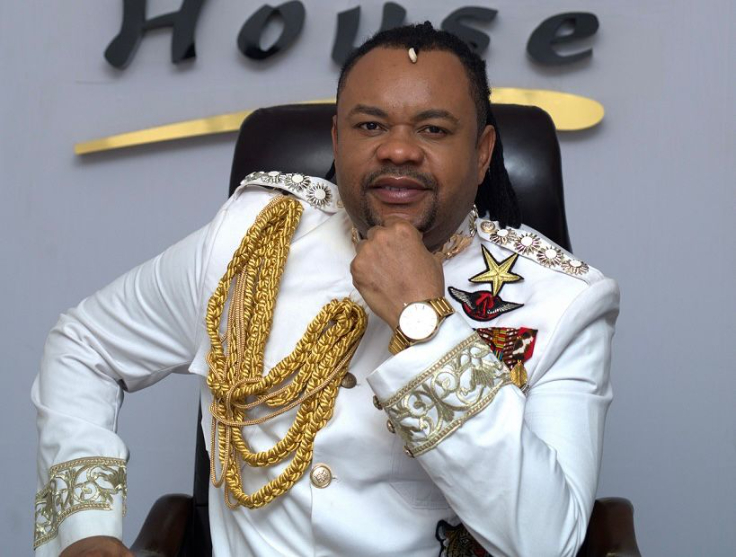
King Charles Lambert
The Black Wall Street Community has officially opened its membership to Africans across the continent and in the diaspora, inviting individuals to participate in what its founder, King Charles Lambert, describes as a transformative economic ecosystem aimed at fostering collective prosperity, shared ownership, and long-term wealth creation.
The initiative is built around a philosophy known as the Compassionate Capitalism Economic System, which seeks to establish an inclusive financial structure where members can participate as shareholders in a network of economic platforms designed to address essential human needs while generating sustainable economic opportunities.
According to Lambert, the community operates through a framework of 28 sector-based digital applications, each focused on different areas of economic activity. These sectors span a wide range of industries, including banking, education, transport, insurance, infrastructure, business development, and emergency services.
By participating in the system, members are expected to gain access to a network that connects opportunities such as employment, contracts, business partnerships, funding channels, training programmes, and investment opportunities.
Lambert describes the model as one designed to keep wealth circulating within African communities rather than flowing outward.
“Ownership is the foundation of economic freedom,” Lambert said in an interview, encouraging Africans to become shareholders and active contributors to a collaborative economic structure.
The concept behind the modern community draws inspiration from the historic Tulsa Race Massacre, which destroyed the prosperous Black business district known as Black Wall Street in Tulsa, Oklahoma. The community, built by African Americans in the early twentieth century, demonstrated how collective economic organisation could create thriving businesses and generational wealth even under difficult social conditions.
Lambert explained that the modern platform seeks to revive that spirit of economic cooperation by adapting it to the digital age while focusing on Africa and its global diaspora.
In 2021, the Black Wall Street Community commemorated the centenary of the Tulsa tragedy with a two-day programme titled “The Resurrection Event: Africa’s Rebirth.” The programme was held on 31 May and 1 June in Kampala, Uganda.
The event marked 100 years since the destruction of the Black Wall Street district in North Tulsa, where more than 300 people were killed, and over 1,000 businesses were destroyed during a racially motivated attack on the thriving African-American community.
Held at the BWS House in Kampala, the commemorative programme brought together members of the Black Wall Street Community and supporters of its economic empowerment initiatives. The event was hosted by Felix Omozusi and Latoya Benjamin and broadcast live on Black Wall Street Television.
The system is built around a three-part economic strategy known as Educate, Trap, and Invest. The education component focuses on providing economic knowledge, skills training, and information through digital media channels aimed at improving financial literacy and entrepreneurial skills among members.
The “trap” element seeks to reduce economic capital flight by redirecting consumer spending towards businesses within the community’s network, while the investment component aims to convert participation in the system into ownership opportunities through access to business ventures, employment prospects, and investment platforms.
Membership in the community is structured around a shareholder model linked to the 28 digital applications.
Lambert says the system offers structured opportunities for financial participation and the possibility of periodic income generated through the profits of the ecosystem, while also encouraging members to uphold core values such as integrity, empathy, diligence, patience, courage, persistence, contentment with progress, and wisdom.
King Lambert states that the community’s broader mission is to help Africans regain greater control of economic capital and development pathways by supporting sectors such as business empowerment, education, healthcare access, infrastructure development, environmental sustainability, credit systems, and wealth creation.
Supporters of the community argue that Africa’s long-standing economic challenges stem partly from limited access to capital and restricted participation in global financial decision-making structures.
By encouraging Africans to pool resources, share opportunities, and build internal economic networks, the community believes it can strengthen economic independence and accelerate development across the continent.
With membership now open, the Black Wall Street Community is inviting Africans worldwide to join the platform and participate in what Lambert describes as a long-term effort to rebuild economic strength through unity, shared ownership, and value-driven enterprise.
“The future of Africa’s economy will be determined by Africans who are willing to build systems that prioritise unity, ownership, and purpose-driven capital,” Lambert said
About the Author