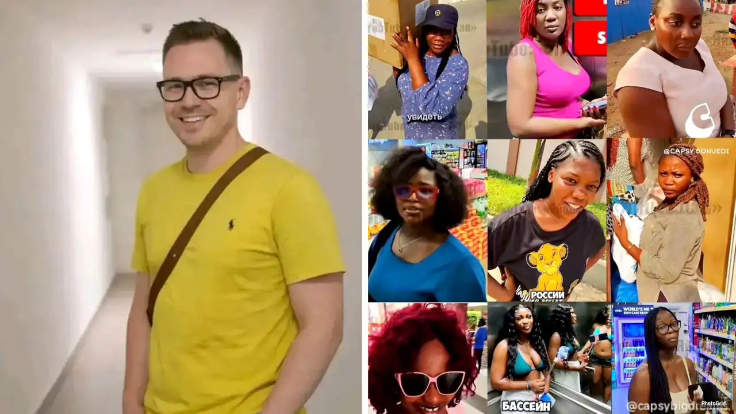
Vyacheslav Trahov and the alleged victims of the filming scandals
Ghana’s Technology Minister, Sam George said plans to request the extradition of a Russian man accused of secretly filming his sexual encounters with women and sharing the footage online without their consent was underway.
The suspect, described by African and Russian media as a self-styled “pick-up artist” and online blogger in his 30s, was said to had travelled to Ghana to covertly record his interactions with women.
The suspect, identified as Vyacheslav Trahov—known online as “Yaytseslav”—is accused of treating Ghana and Kenya as his personal hunting grounds.
Although there were claims he used sunglasses fitted with a hidden camera, though officials have not confirmed the report of his filming method.
George, while speaking to journalists on the issue said he had invited the Russian ambassador to discuss the case.
Earlier, Ghana’s Ministry of Gender, Children and Social Protection said initial investigations suggested the suspect had likely left the country.
The ministry emphasised that “such does not reduce the seriousness of the alleged conduct or the state’s responsibility to pursue accountability”.
George said he had asked the Russian ambassador in Accra for Moscow’s cooperation in securing justice for the victims. However, Russia rarely extradites its citizens, except in extreme circumstances.
The minister told BBC News: “I have invited the Russian ambassador in Ghana for a meeting. The actions of the Russian citizen flout our cyber-security laws. I will officially indicate to the ambassador our official position.”
“That gentleman will be looked for, we will activate every resource in our disposal working with Interpol. We will request the Russian authorities – and that is why I have invited the Russian ambassador – to work with our law enforcement. We want the gentleman to be brought back to Ghana, extradited to Ghana for him to face the rigours of our law.”
George added that Ghana could try the suspect in absentia if he fails to return.
Under Ghana’s Cybersecurity Act 2020, publishing explicit images of adults or children without consent carries penalties of up to 25 years in prison. Ghanaian authorities have increasingly focused on online abuse, including sexual extortion and romance scams, with a growing number of arrests in recent years.
“Consent To Sex Is Not Consent To Filming”
As the wave of the scandal erupted and intensify, prominent voices have pushed that focus remains on the alleged criminality of the suspect.
But a Veteran journalist Ferdinand Omondi, “Adults make personal choices every day, but no such personal decision cancels the right to privacy, and grants one permission to secretly record and expose someone. Consent to sex is not consent to filming. Consent to filming is not consent to publication.”
About the Author