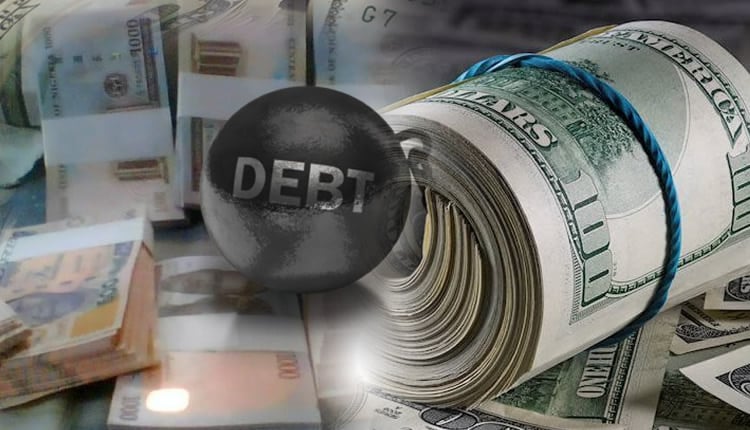
The Federal Government (FG) has exceeded the borrowing target earmarked for the year 2025.
In the first months of this year, the federal government has borrowed N17.36 trillion from domestic and foreign sources.
The borrowing represents N6.06 trillion (55.6 per cent) in excess of the N10.9 trillion stipulated in the 2025 Appropriation Act on 10 months prorate bases. The total borrowing in 2025 approved budget is N13.08 trillion for the entire fiscal year.
The breakdown of the 2025 borrowings so far shows a N15.8 trillion from domestic sources as at October 2025 and N1.56 trillion from the external sources as at first half of 2025.
Meanwhile, the FG last week initiated moves to borrow $2.35 billion (N3.384 trillion) via the Eurobond issuance, increasing the total borrowing to N20.74 trillion.
Also, going by the periodic domestic borrowing template operated this year, the estimated total borrowing for the year is put at nearly N23 trillion, bringing total excess borrowing for the year to about N10 trillion, or 80% in excess of the amount in the Appropriation Act 2025.
Experts in the financial sector have warned that the increment might heightens the risk of a self-reinforcing debt trap, erodes foreign investor confidence, and threatens private sector access to credit.
FG, in the Appropriation Act 2025, projected N54.99 trillion Expenditure and N41.91 revenue. This resulted in a deficit of N13.08 trillion, which is to be financed through domestic and external borrowing.
Based on this, the borrowing target for the first ten months was N10.9 trillion, equivalent to N1.09 trillion monthly.
However, data from the Debt Management office, DMO, and the Central Bank of Nigeria, CBN, showed that the FG borrowed N15.8 trillion from domestic investors from January to October (10M’25) through monthly FGN Bond auctions, FGN Savings Bonds, Sukuk Bond and Treasury Bills.
Financial analysts pointed out that by overshooting its borrowing target amidst rising revenue, the FG is continuing with fiscal indiscipline which hallmarked the immediate past fiscal regime under late president Mohammadu Buhari.
They also said this development poses threat to private sector access to credit and economic growth and debt sustainability efforts.
The experts also warned that FG’s excessive borrowing undermines IMF-backed fiscal consolidation efforts.
The breakdown of the FG borrowings so far this year show that it borrowed N11.43 trillion in 10M’25 through Treasury Bills (Primary Market Auctions), representing a 4.6 per cent, year-on-year, YoY, increase from N10.925 trillion in 10M’24.
The FG, however, reduced its borrowing through FGN Bonds by 22 per cent, YoY to N4.042 trillion in 10M’25 from N5.15 trillion in 10M’24.
But borrowing through the FGN Savings Bond auction rose by 5.6 per cent, YoY to N40.19 billion in 10M’25 from N38.06 billion in 10M’24.
Similarly, FG raised its borrowing through Sukuk Bond issuance to N300 billion in 10M’25 from zero issuance in 10M’24.
But borrowing through the FGN Savings Bond auction rose by 5.6 per cent, YoY to N40.19 billion in 10M’25 from N38.06 billion in 10M’24.
Similarly, FG raised its borrowing through Sukuk Bond issuance to N300 billion in 10M’25 from zero issuance in 10M’24.
Describing the escalated borrowing, Andrew Uviase, Managing Partner at Ecovis OUC, said, “a clear reflection of fiscal indiscipline and poor expenditure control.”
According to him, “the government still needs to do a lot more in reducing and controlling the cost of governance. The present situation suggests the government is not bothered about its spending pattern, and without honesty and transparency, we will continue to see excessive borrowing because, realistically, money is never enough.”
He also noted that non-oil revenue performance has remained disappointing, despite improvements in tax collection by the Federal Inland Revenue Service (FIRS).
“Other non-oil sources are not meeting expectations, and insecurity continues to stifle farming and other economic activities that could boost revenue,” he said.
David Adonri, Vice Executive Chairman of Highcap Securities, blamed the borrowing surge on “aggressive and unrealistic revenue assumptions,” particularly oil-related.
“The 2025 budget was anchored on an oil production target of 2.06 million barrels per day and a price of $75 per barrel — both overly optimistic,” he said. “Actual production has hovered around 1.6 to 1.7 million barrels, while prices have fallen to about $65.”
Adonri warned that the Federal Government’s “addiction to debt” and “brazen fiscal indiscipline” continue to undermine fiscal consolidation. “Despite claims of increased revenue from the removal of fuel and FX subsidies, government spending keeps expanding, and borrowing has become a narcotic,” he said.
David Adonri, said the government must cut its excessive involvement in sectors better managed by the private sector.
“The government is assuming several responsibilities it ought to allow the private sector handle. These drain public finances,” he said. “Ending perennial deficit budgeting will strengthen the government’s balance sheet.”
Adonri noted that while the 2026 tax reforms may improve revenue, “excessive taxation could backfire saving a man from the lion only to deliver him to the shark.”
While urging the FG to cut wasteful expenditures and plug leakages, Tunde Abidoye, stressed the need for a disciplined approach to public finance, according to the Vanguard.
About the Author